News Detail
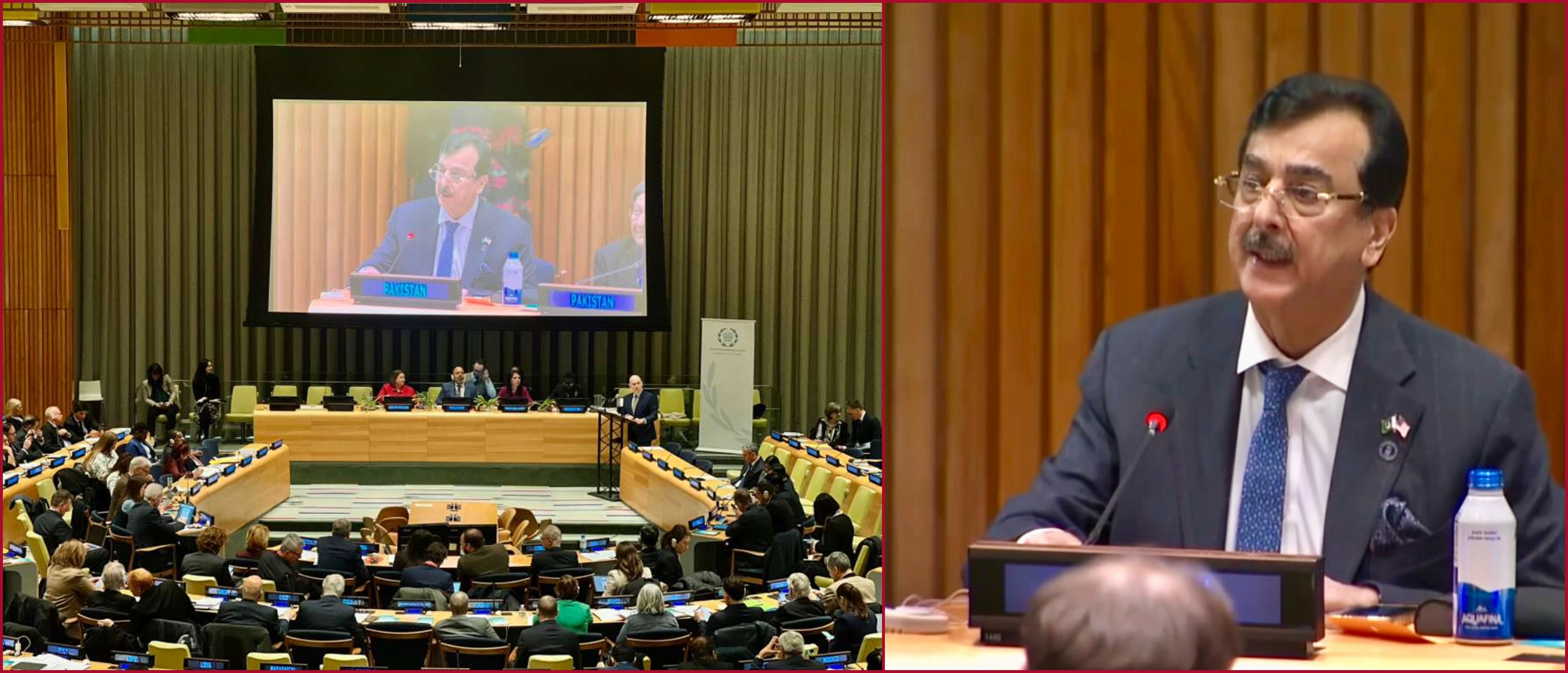
Event Title: Pakistan Parliamentary Delegation Led by Chairman Senate, Syed Yousaf Raza Gilani Addressing The 2026 IPU Parliamentary Hearing at The Un Headquarters.
Event Date: 2026-02-12
Chairman Senate Syed Yousaf Raza Gilani, addressed the Annual Parliamentary Hearing at the United Nations, jointly convened by UN General Assembly, and the Inter-Parliamentary Union (IPU). The high-level gathering brought together parliamentary leaders from across the globe under the theme: “The UN at 80 – Renewing trust and purpose through cooperation and partnership.”
In his address, Chairman Gilani reaffirmed Pakistan’s unwavering commitment to the United Nations as an indispensable platform for multilateral cooperation, grounded in its universal membership and Charter-based mandate. He emphasized that the UN’s effectiveness depends not merely on declarations, but on the faithful implementation of collective commitments by Member States.
Highlighting the interlinked nature of the UN’s three pillars—Peace and Security, Human Rights, and Development—Chairman Gilani underscored that sustainable progress cannot be achieved in isolation. “We cannot fully realize one pillar without advancing the others,” he stated, stressing the need for integrated and coordinated global action.
The Chairman drew attention to the multifaceted crises confronting the world today, including food, fuel, and financial instability; unsustainable debt burdens; widening inequalities in global economic and financial systems; rising poverty and hunger; climate change; and escalating geopolitical tensions. He noted that these challenges disproportionately affect developing countries and significantly hinder their ability to implement the 2030 Agenda for Sustainable Development, meet global climate goals, and promote lasting peace.
Calling for strengthened multilateral cooperation, Chairman Gilani emphasized the urgent need for adequate, predictable, and sustainable financing to enable the United Nations to effectively deliver on its mandates across all three pillars. He also highlighted the importance of the peaceful resolution of long-standing disputes in accordance with the purposes and principles of the UN Charter, including the implementation of relevant UN Security Council resolutions.
Underscoring the importance of institutional reform, the Chairman stated that enhancing the credibility and effectiveness of the United Nations requires democratic, transparent, and accountable decision-making processes.
In this context, he described national parliaments as indispensable partners of the United Nations, particularly in ensuring national ownership of international commitments. Through their legislative authority and budgetary oversight, parliaments play a vital role in translating multilateral objectives into national policies and ensuring their effective implementation. He further emphasized the responsibility of parliaments in fostering public understanding of multilateral engagement and promoting transparency in governance.
Chairman Gilani welcomed the strong partnership between the United Nations and the Inter-Parliamentary Union, describing it as a practical and effective framework for deepening cooperation between multilateral institutions and national legislatures. He expressed confidence that closer collaboration between multilateral forums and parliaments can serve as a catalyst for achieving shared global goals.
Referring to his stewardship of the Inter-Parliamentary Speakers’ Conference (ISC), which he assumed last year, Chairman Gilani reiterated his commitment to uniting parliamentary voices on pressing global challenges. He expressed optimism that enhanced synergy between the UN, the IPU, and the ISC would further advance common aspirations for peace, development, and the well-being of peoples worldwide.
Chairman Gilani’s address reflected Pakistan’s principled stance in support of multilateralism, equitable global governance, and strengthened parliamentary diplomacy to meet contemporary global challenges.
He also thanked President of UNGA Ms. Annalena Baerbock and President of IPU Dr.Tulia Ackson for this initiative.